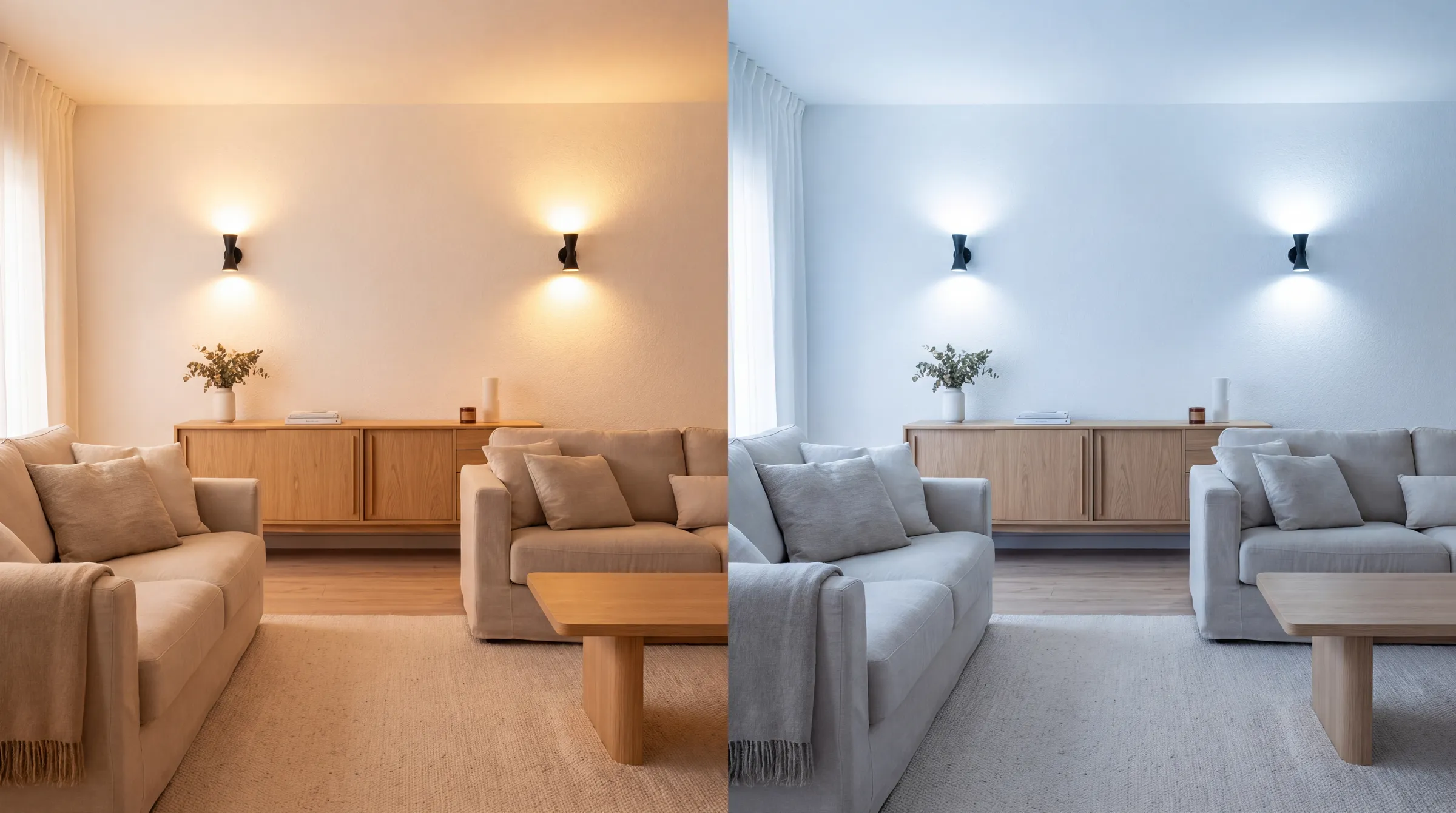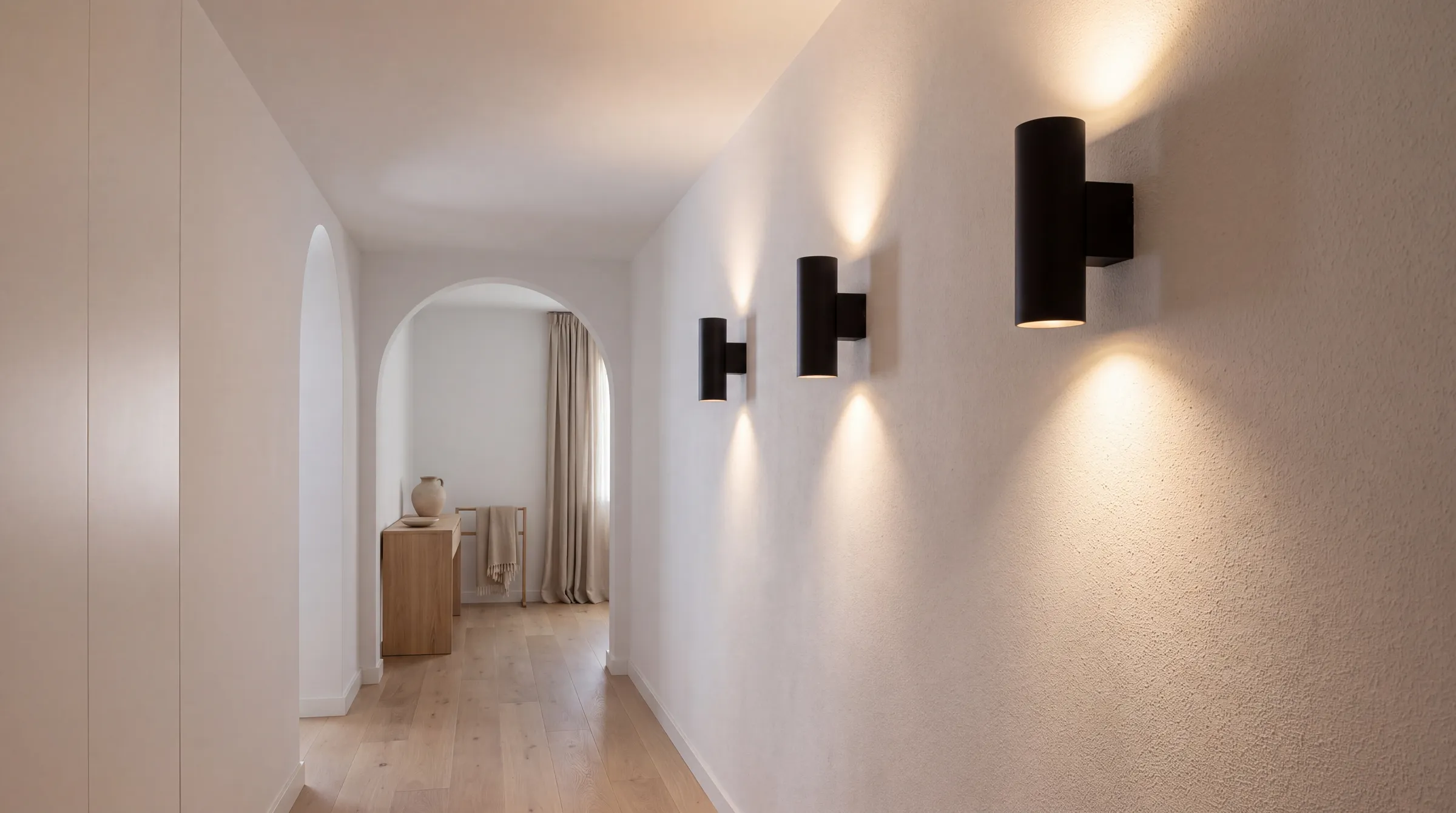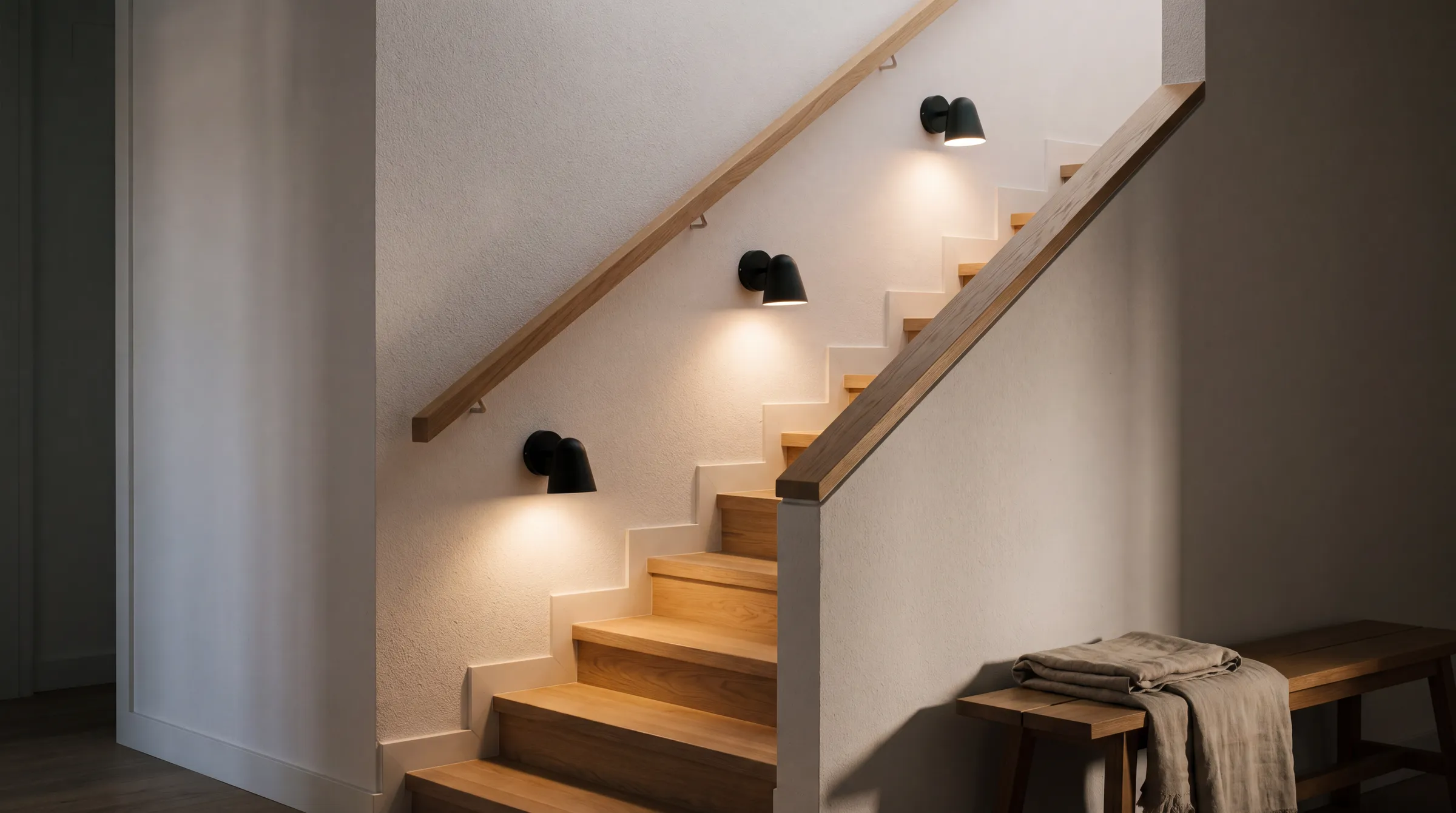

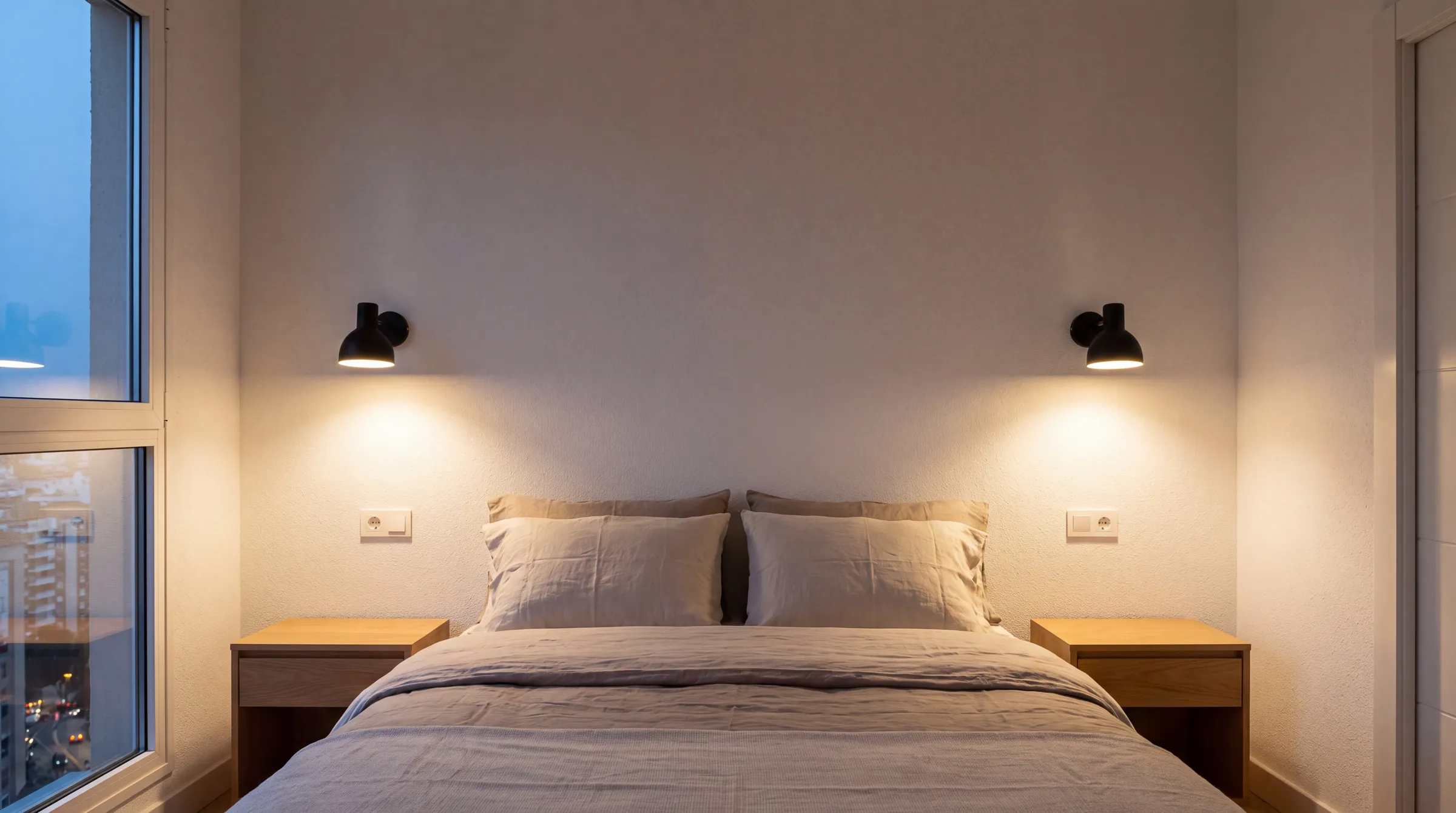
The general rule: a wall light goes at a height of 1.60 to 1.80 m from the floor in a hallway or living space, roughly at the eye level of someone standing. But the right height depends on the room and on what the light is for: by the bed it comes down to headboard level, at the bathroom mirror the aim is a face lit without shadows, and outdoors it goes up above the door. This guide brings together every measurement, room by room.
In short: the right height for each room
If you only want the figure, this table sums up the recommended height for each case. Further down, we explain the reason behind each measurement.
| Room | Recommended height | Reference |
|---|---|---|
| Bedroom (beside the bed) | 90–110 cm above the mattress | On each side of the headboard |
| Bathroom mirror | 1.60–1.70 m from the floor | At eye level |
| Hallway | 1.60–1.80 m from the floor | One every 1.5–2 m |
| Staircase | 1.70–1.80 m above the step | Following the slope |
| Living room (reading) | 1.00–1.20 m above the seat | Beside the sofa |
| Outdoors (door) | ~2.20 m from the floor | Protected from rain according to its IP rating |
The logic behind these figures is always the same: the light goes where it is needed, at the eye level of whoever will use it. A well-placed wall light lights a specific task — reading in bed, shaving at the mirror, climbing the stairs — or creates atmosphere by bouncing light off the wall. Badly placed, it dazzles or leaves areas in shadow. That is why it pays to decide first what each light point is for, and only then how high it goes.
How high should bedroom wall lights be?
In the bedroom, bedside wall lights do two jobs: giving light to read by and creating atmosphere. That is why they are not measured from the floor but from the mattress. The right height is between 90 and 110 cm above the mattress, on each side of the bed.
At that height, the beam falls on the book without dazzling the person lying next to you, and the switch stays within reach from the pillow. A few more tips:
- Symmetry: the two wall lights, one on each side, should sit at exactly the same height so the wall stays balanced.
- Direction: if the wall light is adjustable, point the beam downwards, towards the reading area, not towards the face.
- High or four-poster beds: always measure from the top of the mattress, not from the bed base.
You can see models designed for this spot in our collection of bedside wall lights.
Wall light height at the bathroom mirror
Mirror lighting is the one you cannot get wrong. The right height for bathroom wall lights is at eye level, between 1.60 and 1.70 m from the floor, placed on both sides of the mirror, not above it.
The reason is simple: overhead light, placed only above the mirror, casts shadows under the eyes, nose and chin. Two light points at the sides light the face from the front and evenly, ideal for shaving or putting on make-up. If the mirror is very wide, raise them slightly to 1.70–1.80 m and space them about 60–70 cm apart.
For the bathroom, we go into detail in the guide how to light a bathroom, and you can see models in the collection of bathroom mirror wall lights.
Hallway, staircase and living room
In hallways and living spaces, the reference height is once again the eye level of someone standing: between 1.60 and 1.80 m from the floor. From there, each room has its own nuance.
Hallway
Fit a wall light every 1.5–2 m along the way, at 1.60–1.80 m from the floor, instead of a single central ceiling light. That way the light follows you along and the hallway looks wider. You will find all the details in how to light a hallway.
Staircase
The wall lights follow the line of the slope, at about 1.70–1.80 m above the step, with one light point every 1.5–2 m so that no step is left in shadow. It is a matter of safety as much as looks; we cover it in depth in how to light an indoor staircase.
Living room
Beside the sofa, reading wall lights go lower, at 1.00–1.20 m above the seat, so the light falls on the book. For the rest of the living room, the ambient height goes back to 1.60–1.80 m. You will find the three-layer method in how to light a living room.
For all three rooms, the collection to look at is our indoor wall lights.
Outdoor wall lights: door, façade and terrace
Outdoors, the height goes up. Above a front door, the wall light goes at about 2.20 m from the ground, above the frame, so it lights the entrance without dazzling whoever arrives. On a façade or terrace, space the light points every 2–3 m at that same height, aiming to light the ground and the paths rather than the eyes of someone looking at the house head-on.
Here the deciding factor is not only height, but protection against water (the IP rating): the more exposed the wall light is to rain, the higher its IP rating should be. A wall light under a covered porch can have a lower IP rating than one fully exposed to the weather. See the models suited to outdoor use in the collection of outdoor wall lights.
Common mistakes when fitting a wall light
Almost every height mistake comes down to one of five:
- Fitting it too high: above 2 m in a living space, the wall light ends up acting as a disguised ceiling light and loses its wall-lighting effect.
- Fitting it too low: below 1.50 m it dazzles anyone sitting down, because the light source sits at eye level.
- Forgetting the thickness of the mattress: in the bedroom, measuring from the floor instead of from the mattress leaves the wall lights too high to read by.
- Ignoring the direction of the beam: a wall light that shines upwards creates atmosphere; one that shines downwards gives useful light. Choosing the wrong one changes the result completely.
- Breaking the symmetry: two wall lights at different heights on either side of a bed or mirror throw the whole wall off balance.
Once the measurements are clear, the rest is a matter of choosing the right model for each room. And if you are still torn between warmer or more neutral light, the guide warm or cool light? helps you choose the temperature for each room.